Solar Generator vs Gas Generator: Real Trade Offs
Most comparisons are written by sellers of one side. This matrix scores each option by load, outage days, fuel and noise so you can decide for yourself.
 By BuyOnceChoice Editorial Team
Updated November 16, 2026
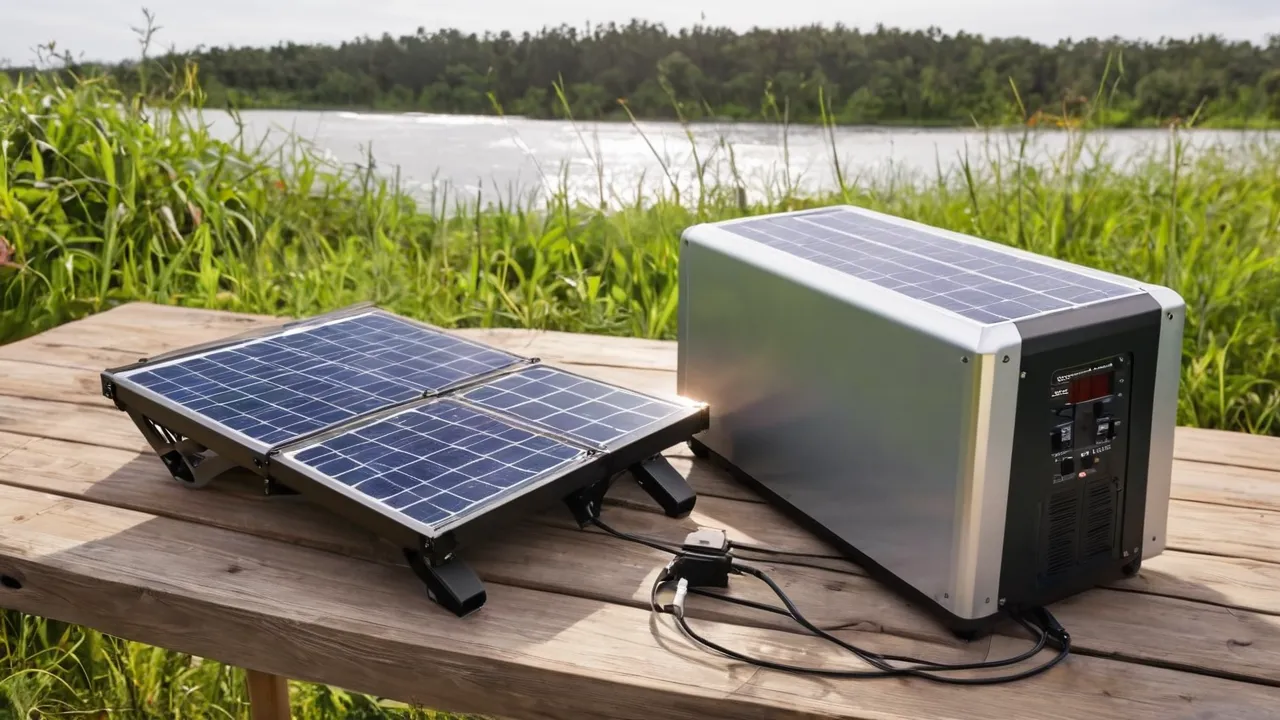
A solar generator, meaning a battery power station with solar panels, runs silently, makes no exhaust, and costs nothing to fuel, but it is limited by battery capacity and by how much sunlight you get. A gas generator burns fuel to make power for as long as you can refill it, delivers high output for heavy loads, and is loud and must run outdoors. Choose solar for small loads and quiet use, gas for large loads and long outages, and consider owning both.
Most pages on this topic come from sellers of one type or the other, so this guide uses a neutral decision matrix by load type, outage days, and where you live, with a worked comparison on paper. Browse our solar generator category and portable generator category to compare models, and read how we review for how we treat specifications.
What You Are Actually Comparing
A solar generator is two things: a power station with a battery and inverter, and solar panels that recharge it. The station delivers a fixed amount of energy per charge. The panels determine how quickly it refills. A gas generator is an engine and an alternator. It stores nothing, so its limit is the fuel you have.
Each has a different bottleneck. For a solar generator it is energy in watt-hours and the speed of recharging. For a gas generator it is the fuel supply, the noise, and the need for safe outdoor placement. Knowing the bottleneck tells you which one fits your situation.
Matrix by Load Type
| Load type | Solar generator | Gas generator |
|---|---|---|
| Phones, laptops, lights, router | Excellent fit | Overkill |
| Refrigerator and freezer | Works for hours to a day or more | Works for days |
| Medical devices | Quiet, clean power, plan a backup | Possible with care and stable power |
| Well pump or sump pump | Small 120 volt pumps only | Better for surge and larger pumps |
| Window air conditioner | Short runs on a large unit | Longer runs |
| Central air, electric heat, range | Not practical | Needs a large unit and transfer switch |
| Power tools and job sites | Light tools only | Strong fit |
The pattern is simple: low and steady loads favor solar, high and heavy loads favor gas. Read the table by your largest single load first, since one big appliance can move you from one column to the other, and then by the number of loads that must run at the same time. If you are near the line between two rows, choose the option that leaves margin.
Matrix by Outage Length
A few hours: either works, and solar is simpler. One day: a mid-sized solar generator covers essentials, and gas is easy. Several days: gas keeps going with fuel, while solar needs strong sun and enough panels to refill each day. A week or more: gas with stored fuel or a standby system, and solar as a supplement. Estimate by dividing usable watt-hours by your daily use for solar, and by the generator’s fuel use against your fuel stock for gas.
Panel Reality Check
Panels deliver a fraction of their label for most of the day. A 400 watt array in good sun may collect about 1,200 to 1,800 watt-hours a day, and much less in clouds, snow, or shade. If your essentials use 2,000 watt-hours a day, the panels cover most of it on a sunny day and little on a stormy one. Always plan wall or generator charging as a backup, and check the unit’s solar input limit in the manual.
A Worked Three-Day Comparison
Say your essentials are a refrigerator, a freezer, lights, a router, and phone charging, about 3,000 watt-hours a day. Over three days that is 9,000 watt-hours. A solar generator would need around 10,500 watt-hours of label capacity to cover three days with no sun, which is a very large and heavy system, or a mid-sized unit with enough panels to recover a good share each day. A gas generator running intermittently, a few hours at a time to keep food cold and recharge small batteries, would use only a modest amount of fuel, but you must have it, store it safely, and run the engine outdoors.
Now consider the same house if the loads include a well pump and a window air conditioner. The solar generator now needs a larger inverter and far more capacity, and the gas generator simply needs a larger engine and more fuel. The gap widens as loads grow, which is why the matrix leans toward gas for heavy duty.
Cost Thinking Without Quoting Prices
Compare in three parts: upfront cost, running cost, and ownership cost. Upfront, solar generators cost more per watt of output and per watt-hour of storage, and gas generators cost less per watt at larger sizes. Running, solar is free after you own the panels, while gas costs fuel, oil, and maintenance for each hour. Ownership includes how long each lasts: lithium batteries wear with cycles and age, while engines wear with hours and neglect. A generator that never starts when needed has a very high effective cost, and a solar generator used monthly for camping spreads its cost over many uses. Estimate your annual hours of use and the years you will keep it.
Fuel, Storage, and Maintenance
Gas generators need fuel, which goes stale in months without stabilizer, and they need oil changes, filters, and spark plugs. Fuel must be stored safely in approved containers outdoors. In widespread outages, fuel can be hard to find. Solar generators need no fuel, little maintenance, and a battery kept at the storage level the manual recommends. Both benefit from a trial run before storm season, using a charge check and a short load run for the station and a start-up check for the engine.
Noise, Fumes, and Placement
Gas generators produce carbon monoxide, which is deadly. Run them outdoors only, at least 20 feet from the house with the exhaust pointed away, as the Consumer Product Safety Commission advises, and use battery-powered carbon monoxide alarms. They are loud, and some neighborhoods, campgrounds, and associations restrict them. Solar generators are nearly silent and produce no exhaust, so they run indoors, on balconies, and in apartments, though lithium batteries have their own rules about heat, moisture, and charging temperatures.
Decision Matrix Summary and Who Should Skip What
- Apartment or condo dwellers: solar generator, since generators are unsafe or banned.
- Short outages and light loads: solar generator.
- Frequent multi-day outages with heavy loads: gas generator or a standby system.
- Camping with quiet rules: solar generator.
- Job sites and heavy tools: gas generator.
- Remote cabins with sun: solar generator with expansion, plus a small gas unit as backup.
- Skip a solar generator if your must-run loads are central air, electric heat, or large pumps. Skip a gas generator if you cannot run it safely outdoors or store fuel.
Two Households, Two Different Answers
Household one lives in a city apartment, loses power a few times a year for a few hours, and wants to keep a router, laptops, lights, and a small refrigerator on. A solar generator with a large battery covers this, stays quiet, and can run indoors. A gas generator would be unsafe and likely forbidden.
Household two lives rurally with a well pump and a freezer full of food, and sees multi-day storm outages. A gas generator on a transfer switch covers the pump and freezer through days of cloud, and a small solar generator handles overnight quiet loads. Each household’s right answer is the opposite of the other’s, which is why general advice fails.
How to Check Your Own Situation on Paper, and Safety
- List your essential loads, with running watts and daily hours.
- Add the watt-hours, and compare with a unit’s capacity and your outage length.
- Check the largest surge against the inverter or generator rating.
- Decide where you can run it, and how you will store fuel or recharge.
- Compare maintenance you will actually do.
Never plug either type into a wall outlet to power the house, since backfeed can injure line workers. A licensed electrician should install a transfer switch or interlock for any home connection. Follow each manual for placement, fueling, charging, and temperature limits.
Frequently Asked Questions
Is a solar generator better than a gas generator?
It depends on your loads and outage length. Solar generators are quieter, safer indoors, and cheaper to run, but limited by capacity and sun. Gas generators supply heavy loads and long outages, but need fuel and outdoor placement. Add up your watts and days to decide.
Can a solar generator run a whole house?
Rarely. A portable unit can back up essentials, but central air, electric heat, and large appliances exceed most portable units. Whole-house backup needs a professionally installed battery system or a standby generator, designed by a licensed electrician for your panel.
Do solar generators work in winter?
Yes, with limits. Panels still produce in cold, but days are short and the sun is low, so output drops. Lithium batteries should not be charged below freezing unless the manual allows it. Keep the unit warm, and plan wall or generator charging as a backup.
Final Thoughts
Solar generators fit small, quiet, and short-term needs, and gas generators fit big loads and long events. Use your own load list and outage length to decide, consider owning both, and rely on a licensed electrician for any home connection.
Related buying guides
- Solar Generator vs Home Battery: Pick the Right One
- How Many Solar Panels to Charge a Power Station
- What Is a Solar Generator and How Does It Work
About the author

The BuyOnceChoice Editorial Team researches durable products worth buying once. Our guides compare published specifications, warranty terms, expert review consensus, and verified owner feedback. We do not conduct our own product trials. See How We Review and our Editorial Policy for our standards.