How to Choose an Air Fryer: A Buy Once Checklist
A decision checklist for picking an air fryer that lasts, with rules by household type, cost per year of use, and who should skip the purchase.
 By BuyOnceChoice Editorial Team
Updated November 16, 2026
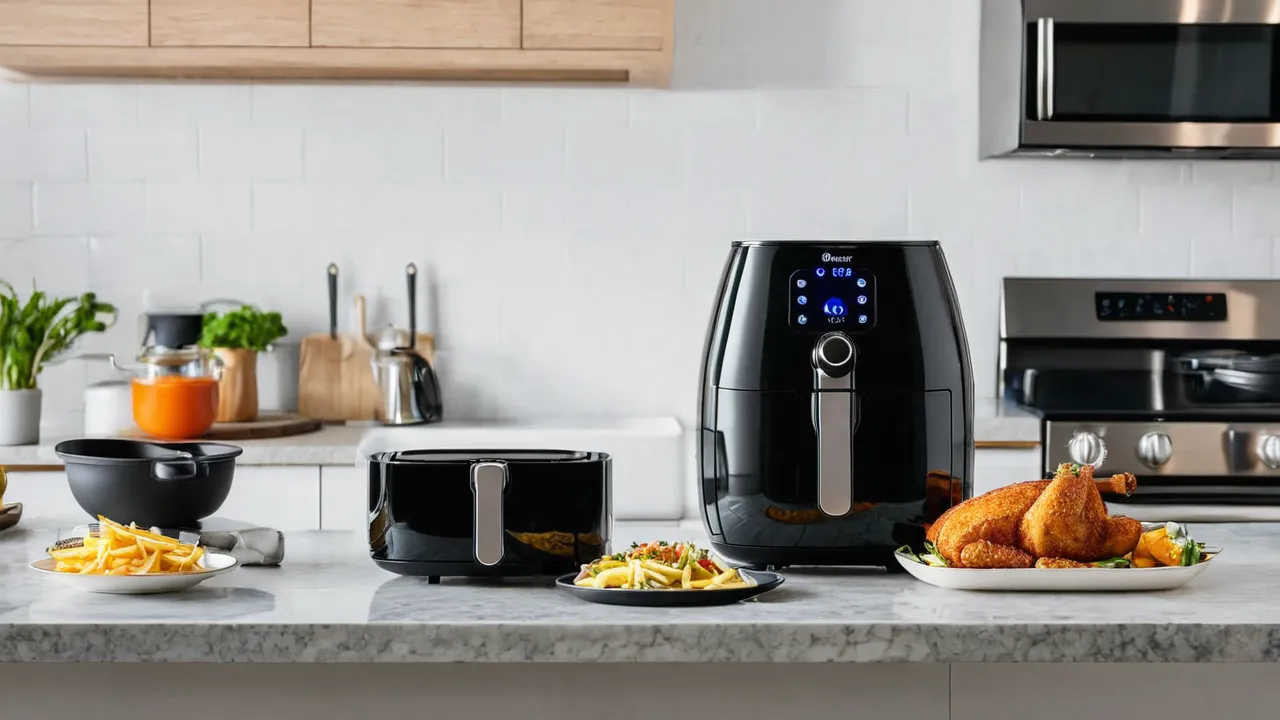
How to choose an air fryer: start with how many people you cook for, pick a basket shape that fits your usual food, then check warranty length and whether the basket and tray can be replaced separately. Those three checks matter more than any preset menu or app feature, and they decide whether the machine is still in use years from now.
Start With the Household, Not the Feature List
Most buying advice opens with a list of features. A better opening is a question: how many plates do you fill on a normal night? An air fryer is a small, fast convection oven, and its useful size depends on how much food you need to cook in one pass. Crowding the basket is the most common reason owners complain about pale, soggy results, so capacity should follow your meals, not the other way around.
- One or two people who cook mostly side dishes, reheated leftovers and snacks can live comfortably with a compact basket.
- A family of three or four cooking a protein and a vegetable together usually wants a larger single basket or a two-compartment design.
- Anyone who batch cooks for the week, or entertains, should look at oven-style units with racks, and should weigh how much counter space a larger cavity will take before committing.
Quart ratings are not standardized across makers, so treat them as a rough label. Basket floor area and depth tell you more. A wide, shallow basket spreads food in one layer, which is what produces crisp edges. A tall, narrow one holds more by volume but forces you to shake and rotate food.
Cost per Year of Use
A cheap machine that fails in two seasons costs more per year than a sturdier one that runs for five or six. You do not need exact prices to reason about this. Use a simple formula: purchase cost divided by the number of years you realistically expect to use it, then add the cost of replacement baskets or trays if the maker sells them.
Two things push the real number around. First, how often you will use it. An air fryer that replaces the oven for weeknight dinners earns its counter space quickly, while one used for the occasional frozen snack never does. Second, how long the nonstick surface survives. The basket coating is the part that wears first for most owners, so a machine with a replaceable basket can be worth a higher entry cost than one where a worn basket means a new appliance.
Entry-level units can be a sensible choice if you are unsure that you will cook this way. Midrange and premium models tend to justify themselves only when you will use them several times a week.
Build Quality and Parts You Can Replace
Because a buy-once approach depends on repairability, check these points on the product page and in the manual before buying:
- Whether the basket, crisper plate, and tray are sold as spare parts by the manufacturer.
- Whether the basket handle and release button feel solid in photos and reviews of the part, since these are common breakage points in many categories of appliance.
- The warranty length and what it excludes. Many warranties cover the motor and heating element but not the nonstick coating, so read the exclusions.
- Whether the power cord is detachable or fixed, and how long it is, which affects where the unit can sit.
- Whether customer service has a way to order parts without sending the whole appliance back.
Brands do not publish detailed failure data, so we cannot tell you which models last longest. What we can say, from general category knowledge, is that simple mechanical controls and fewer electronic boards give fewer things to fail, and that a well-vented housing helps the fan and heating element run cooler.
A Simple Capacity Method
Try this method before looking at any listing. Think of the largest single batch you cook on a typical night, such as a pound of chicken pieces, a pound of potatoes cut into fries, or a tray of frozen appetizers. Air fryers crisp food best in a single layer with small gaps, so imagine that batch spread out on a flat surface. If it would cover more than about two thirds of the basket floor, you will need to cook in rounds or choose a bigger floor area.
Then think about what you do after cooking. A family that cooks a main dish and then waits for a second batch of sides will find the waiting wearing. That is where a two-compartment design or an oven-style unit can save real time. A single cook, by contrast, rarely needs more than one batch and gets more value from quick preheat and easy cleaning.
Finally, measure the space. Note the width, depth, and height of the spot where the unit will live, and leave the clearance the manual requires around the exhaust. A machine that must be carried out of a cabinet each time tends to get used less, which defeats the purpose of buying a durable one.
What to Check on the Product Page
- Basket floor dimensions in inches and the maximum fill line.
- Warranty length, and what it excludes about the basket and coating.
- Whether the basket, crisper plate and tray are sold as spare parts.
- Nameplate wattage and cord length.
- Temperature range and whether the dial or screen is easy to read.
- Whether the basket and tray are listed as dishwasher safe in the manual.
- Clearance requirements at the back, sides and top.
Controls and Features Worth Paying For
A temperature dial and a timer cover most cooking. Presets are convenience, not capability. Features that earn their place for many households include a clear shake reminder, a dishwasher-safe basket if you dislike hand washing, and a window or light if you check food often. Features that add little include extensive app control, voice assistants, and long preset lists you will not memorize.
Pay attention to the temperature range. A top temperature that is high enough for crisping, and a low setting that can dehydrate or keep food warm, widen what the machine does. Check the manual for the stated range rather than relying on marketing copy.
Noise is another practical factor. Fan noise varies by design, and a unit in an open kitchen will be heard. Owner comments on product pages are the best sign of whether a particular fan is intrusive.
Common Owner Regrets
- Buying by quarts and finding the basket floor too small for a family meal.
- Buying a large unit that does not fit under the cabinet with the exhaust clearance.
- Skipping the warranty details and finding that the coating is excluded.
- Choosing a touchscreen with many presets and using only the dial.
- Ignoring noise until the unit runs in an open kitchen.
Each regret is easy to avoid with the checklist above and a tape measure.
Safety and Placement
Air fryers draw a large amount of power for their size. Plug the unit into a grounded outlet that is not shared with other high-draw appliances, such as a microwave or kettle, and avoid extension cords and power strips. Keep the cord away from hot surfaces and the exhaust vent, and leave clear space behind and above the unit as the manual directs, because the exhaust runs hot. Never submerge the base in water; wipe it with a damp cloth and wash only the removable parts the manual says are washable. If you have any doubt about the outlet or wiring in your kitchen, ask a licensed electrician.
Check the how we review page to see how we weigh safety and durability information when we write buying guides.
Who Should Choose What, and Who Should Skip
Use these rules as a quick decision aid.
| Buyer | Better fit | Why |
|---|---|---|
| Single person, small kitchen | Compact single basket | Fits on a counter, preheats fast, easy to clean |
| Family cooking one main dish | Large single basket | Enough floor area for one layer |
| Two dishes at once | Dual-compartment model, see our dual air fryer guide | Separate zones cook different foods |
| Batch cooking or baking | Oven-style unit | Racks and larger cavity |
Who should skip: if you already have a good convection oven and rarely cook small portions, an air fryer adds little. If your counter is tight and you cook mainly soups, stews, and pasta, you will find it sitting idle. If you do not want to wash a basket after every use, think carefully before buying.
Frequently Asked Questions
What should I look for when buying an air fryer?
Check the basket floor size for your usual meal, warranty length and coverage, replaceable baskets and trays, wattage and a clear temperature range. Compare interior dimensions rather than quarts, measure your counter and confirm clearance. Presets and apps matter less than a sturdy basket and parts you can replace.
What size air fryer should I buy?
Size by the food you cook. A basket that fits your usual meal in one loose layer is the goal. Singles and couples do well with compact baskets, while families should compare floor dimensions or consider a dual basket. Quarts alone mislead, so check the inside floor measurements.
Is a dual basket air fryer worth it?
It is worth it if you often cook two foods that must finish together or cook for three or more people. If most meals are one dish, a single basket is simpler and takes less space. Compare each basket’s size, since quarts are split between the two.
Do I need to pay more for an air fryer with presets?
Usually not. A temperature dial and a timer cover most cooking, and presets are convenience rather than capability. Pay more for a stronger warranty, replaceable parts, a sturdy basket and a shake reminder if you like it, not for a long list of presets.
Final Thoughts
Choose the size by the food you cook, choose the build by the parts you can replace, and choose the warranty by what it actually covers. That sequence keeps you from paying for features that never matter. When you are ready to compare models, move on to our air fryer category, where the guides apply these same criteria.
Related buying guides
- How to Clean an Air Fryer Without Ruining the Coating
- Preheating an Air Fryer: When It Matters
- Rotisserie Air Fryers: Are They Worth the Extra Space
About the author

The BuyOnceChoice Editorial Team researches durable products worth buying once. Our guides compare published specifications, warranty terms, expert review consensus, and verified owner feedback. We do not conduct our own product trials. See How We Review and our Editorial Policy for our standards.