How to Choose an AV Receiver: Channels, Power, HDMI
Pick an AV receiver by channel count, power for your speakers and HDMI standard, then judge heat design and repairability before you buy.
 By BuyOnceChoice Editorial Team
Updated November 16, 2026
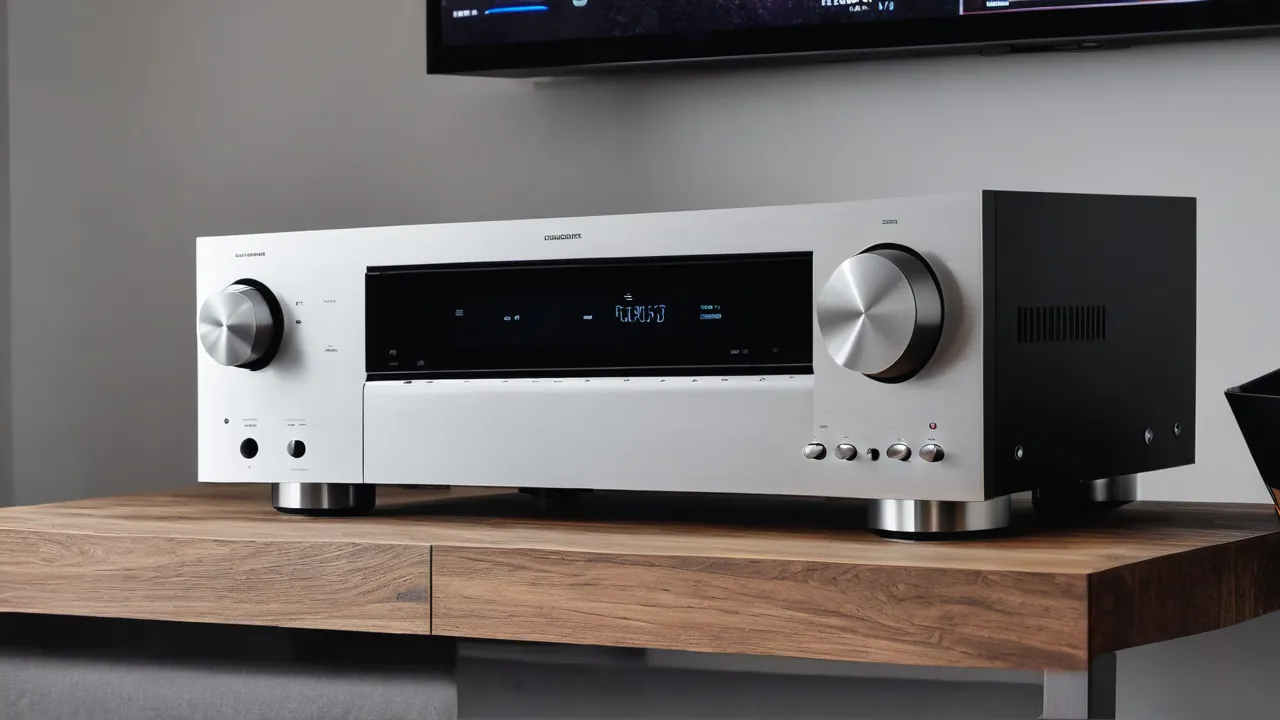
To choose an AV receiver, count the speakers you will actually run, match the power rating to your speakers and room, confirm the HDMI inputs and standards your TV and consoles need, and then favor a model with good cooling and a repairable design. Those four checks cover nearly every regret owners report, and the last one is the one most guides skip.
This guide takes a buy once view. A receiver is the hub of a system, so it will outlast several TVs, a few streaming boxes and possibly a speaker upgrade. The goal is to pick a unit that stays useful, not the one with the longest spec sheet. Browse the full AV receivers category when you are ready to compare specific models, and see how we review for how we evaluate products without running product trials.
Start with the speaker plan, not the receiver
Every decision follows from how many speakers you will connect. A basic surround layout uses five speakers plus a subwoofer. Adding two ceiling or upward-firing Atmos speakers makes it a 5.1.2 layout, which needs seven amplified channels. Going to 7.1.2 needs nine. A receiver advertised as 7.2 channels means seven amplified channels and two subwoofer outputs, not nine speakers.
Write down the layout you want today and the one you might grow into. If you might add height speakers in two or three years, buy the channel count now or confirm the receiver has pre-outs that let you add an external amplifier later. Pre-outs are the single cheapest way to protect an upgrade path, because they let a small receiver act as the brain while a separate amplifier handles the extra speakers.
Read power ratings the way a buyer should
Power is the most misread spec. Manufacturers often quote a figure measured with only two channels driven, into a friendly load, over a narrow frequency range. Real movies drive all channels at once. Look for the number measured with all channels driven, and check whether the rating covers the full audible range or a single frequency.
What matters more than the headline figure is how well the speakers and receiver pair. Sensitive speakers need little power, while low sensitivity speakers in a large room need more headroom. A useful rule is that a receiver with a real all-channel rating comfortably above what your speakers call for will run cooler, and a cooler receiver lasts longer.
HDMI is where receivers age first
The audio electronics in a receiver rarely go obsolete. The video switching does. HDMI standards move on, and a receiver bought around an older standard can block features your newer TV or console expects, such as higher frame rates, variable refresh rate or auto low latency mode.
Check three things on the product page. First, how many HDMI inputs support the newest bandwidth, because some models only upgrade a subset of ports. Second, whether the TV connection supports eARC so you can send lossless surround audio from the TV apps back to the receiver. Third, whether the manufacturer has a record of delivering firmware updates for HDMI problems, which you can usually judge from the support page and owner forums. Count your sources: a console, a streaming box, a disc player and a cable box already take four inputs.
Heat design and repair cost, the buy once lens
Heat is the main enemy of any amplifier. Capacitors age faster when warm, solder joints stress with repeated heating and cooling, and a receiver packed into a closed cabinet will run hotter than the same unit on open shelving. When comparing models, look for generous vent area, a heavier chassis and a substantial heat sink design, and check what the manual says about required clearance. The principle is simple: plan space around the receiver before you buy.
The most common failure that owners describe is not a blown amplifier but a problem in the HDMI board or digital video section, because it contains the most complex and most changed electronics. A failed HDMI board can mean a repair bill that approaches the cost of a replacement, especially on midrange models. No public failure rate data exists for receivers, so treat claims about reliability by brand with caution and rely on structure: a unit with a modular, serviceable design and available parts is a better long-term bet than a sealed, cost-cut one.
Before you buy, check whether the brand lists authorized service centers, whether the warranty terms are clear on the product page, and whether service manuals and parts are discussed by technicians. A receiver that someone can repair is worth more than one that is simply cheaper today.
Decision table by room and speaker count
| Situation | What to prioritize | What to skip |
|---|---|---|
| Small room, five speakers, one TV | Solid all-channel power, current HDMI on every port, eARC | Nine channel models you will never fill |
| Medium room, Atmos with height speakers | Seven to nine amplified channels, room correction, pre-outs | Models with no pre-outs |
| Large room or low sensitivity towers | Strong all-channel rating, big chassis, pre-outs for a power amp | Compact slim receivers that run hot |
| TV plus music household | Good stereo performance, phono handling through a separate preamp if needed | Paying for features you never switch on |
| Closed cabinet install | Cooler running design, vented shelf, careful clearance | Small, fully enclosed spaces with no airflow |
Features worth paying for and features to ignore
Room correction is worth having in some form, because even a good speaker pair sounds uneven in an untreated room. Streaming and multiroom features are convenient, but they live in software and can age badly, so treat them as bonuses and keep a cheap external streamer in mind as a replaceable option. Built-in Bluetooth and Wi-Fi are standard. Features worth skipping are those you will not use: a video upscaler when your TV does it better, or gaming modes if you never plug in a console.
Be wary of sheer channel count as a signal of quality. A well-built five or seven channel receiver with a strong power supply usually serves a room better than a nine channel unit built to a price. If you want to see how the categories line up, the best AV receiver roundup compares complete models, while this article is about the method.
Before you finalize, put your list on one page and mark each line yes or no. Channels cover the layout you want within a few years. All-channel power suits your speakers and room. HDMI covers every source on current bandwidth, with eARC on the TV connection. Cooling and clearance fit the place you will put it. Service and warranty terms are clear on the product page. A receiver that earns yes on all five is a safe long-term purchase, and one that fails two or more is worth passing on, however good the price looks.
A Simple Decision Rule
Choose a seven channel receiver with pre-outs if you plan to stay with a surround layout for years and might add height speakers. Choose a nine channel model only if you already own or plan to buy nine speakers and have the room for them. Choose a five channel model for a modest room and a simple setup, but only if you are certain you will not add height speakers. Skip any model that has too few HDMI inputs for your devices, and skip a receiver you plan to place in a sealed cabinet without airflow.
If your life is mostly music with a TV occasionally, consider whether a stereo receiver fits better than a surround unit, because you may be paying for channels you do not use.
Frequently Asked Questions
How many channels should my AV receiver have?
Count the speakers in the layout you want today and the one you might grow into. A 5.1 layout needs five amplified channels, 5.1.2 needs seven, and 7.1.2 needs nine. A receiver advertised as 7.2 has seven amplified channels and two subwoofer outputs, not nine speaker channels.
Is it better to buy a receiver with more watts?
Not by itself. Look for a rating measured with all channels driven and check whether it covers the full audible range. Sensitive speakers need little power, and low sensitivity speakers in a large room need more headroom. A receiver working below its limits runs cooler and tends to last longer.
Do I need eARC on my AV receiver?
If you want lossless audio from your TV’s own apps or inputs, yes. If every source plugs into the receiver, standard ARC is usually enough. Check the product page for which HDMI ports support the newest bandwidth, and confirm eARC on the TV connection.
Are AV receivers repairable?
Many are, but a failed HDMI board can cost a large share of the receiver’s value. Before you buy, check whether the brand lists authorized service centers, whether the warranty terms are clear, and whether parts are discussed by technicians. A receiver someone can repair is worth more than one that is simply cheaper today.
Final Thoughts
An AV receiver is a long-term purchase, so judge it by how it will behave in your room in a decade: enough channels for the layout you really want, honest power for your speakers, HDMI that will not block your next TV, and a cooling and repair story you can believe. Take the time to write down your speaker plan and your device list before you shop, and the choice usually becomes obvious. When two models look equal, pick the one with better ventilation, more pre-outs and clearer service support.
Related buying guides
- 4K 120Hz Gaming Through a Receiver: Passthrough Checklist
- 5.2 vs 7.2 vs 9.2 Receivers: Channel Count Compared
- Crossover Settings Explained: Large vs Small Speakers
About the author

The BuyOnceChoice Editorial Team researches durable products worth buying once. Our guides compare published specifications, warranty terms, expert review consensus, and verified owner feedback. We do not conduct our own product trials. See How We Review and our Editorial Policy for our standards.