Dutch Oven Size Guide: How Many Quarts You Need
Pick a Dutch oven by who you feed, what fits your oven, and what you can lift when full. A simple table turns quarts into a clear buying decision.
 By BuyOnceChoice Editorial Team
Updated November 16, 2026
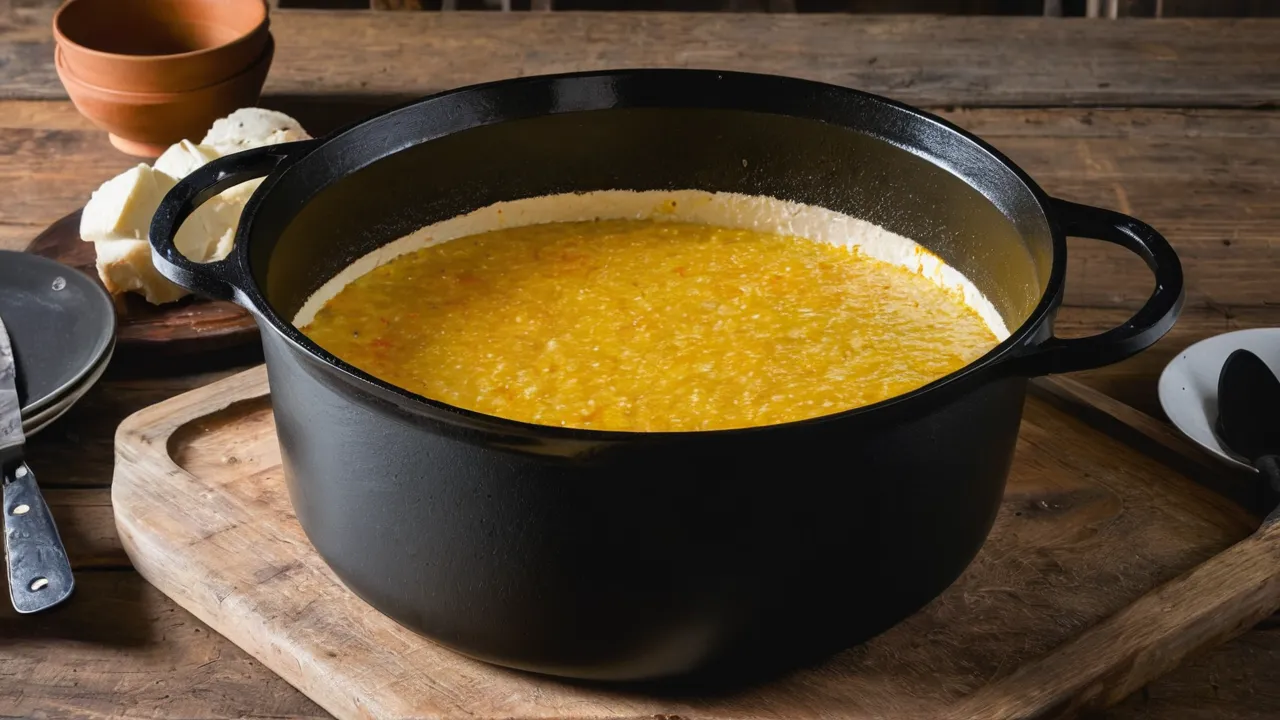
For most households, a 5 to 6 quart Dutch oven is the best single size: it serves about four to six people, holds a whole chicken or a standard loaf of bread and fits most ovens and cabinets. Choose 3 to 4 quarts for one or two people, and 7 quarts or more for large families, big batches of stock or roasts, provided you can lift the pot when it is full.
What Quarts Actually Tell You
A Dutch oven’s size is given in quarts, which is the liquid volume the pot holds when filled to the brim. You never fill it to the brim in practice, so the usable capacity is smaller. A 5.5 quart pot comfortably cooks about 4 quarts of stew, since you need room for bubbling and stirring and for the lid to sit properly.
The same quart number can come in different shapes. A round pot and an oval pot of the same capacity have different footprints, and a tall, narrow pot and a wide, shallow one have different surface areas. Check the interior diameter and depth on the product page, and not only the quarts. Our Dutch oven category lists the main shapes.
Weight is part of size. A pot’s weight rises with capacity, and an enameled cast iron Dutch oven is heavy even when empty. As a rough guide, a 5 to 6 quart enameled pot often weighs well over ten pounds empty, and a 7 quart pot more. Check the listed weight, and picture lifting it full from a hot oven.
Headcount Math
A simple rule links the pot to the number of people it feeds.
| Capacity | Typical servings of stew or soup | Good for |
|---|---|---|
| — | — | — |
| 2 to 3 quarts | 1 to 2 | Small meals, side dishes, a single loaf of small bread |
| 3.5 to 4 quarts | 2 to 3 | Couples, small braises |
| 5 to 6 quarts | 4 to 6 | Most households, whole chicken, standard bread |
| 7 to 8 quarts | 6 to 10 | Large families, batch cooking, big roasts |
| 9 quarts or more | 10 or more | Large gatherings, stock, canning-style batches |
These numbers are approximate and depend on appetite and recipe. If you like leftovers, go up a size. If you cook for one and rarely batch cook, a smaller pot is easier to handle and stores better.
Will It Fit Your Oven and Stove
Measure before you buy. Check the interior height and width of your oven, the distance between racks and the opening of the door. A Dutch oven with handles can be wider than its stated diameter, and the lid knob adds height. A pot that fits on the lowest rack may not fit on the middle rack. Check that the knob clears the rack above.
Check your burner. A large pot on a small burner heats unevenly, and on an induction cooktop, the pot must be detected. Check that the base is flat. If you have a glass top stove, read the manual about heavy cast iron, and lift rather than slide. Our cast iron cookware page covers cooktop issues in more depth.
Cabinet space matters too. Measure the shelf where the pot will live, and consider the lid, which needs its own space or sits on the pot. If you have to lift a heavy pot over your head, you may stop using it.
Lift Weight, Bread, Roasts and Handling
Think about what you will cook and what that means for size.
- Bread: a 5 to 6 quart round pot suits a standard loaf. Smaller pots make small loaves, and large ones make flat loaves.
- Whole chicken: a 5 to 6 quart pot holds a typical whole chicken with room for vegetables, depending on the bird. A smaller bird fits in a 4 quart pot.
- Pot roast: a 5 to 7 quart pot holds a roast of a few pounds with vegetables.
- Soup and stock: 6 to 8 quarts or more give room for large batches.
- Pasta: a 5 to 6 quart pot boils pasta for a few people, though a stockpot is better for large amounts.
- Deep frying: depth and stability matter, and the maker may have limits, so check the manual.
Lifting is the limit for many people. A full 7 quart enameled pot can weigh well over twenty pounds with food. Use two hands and good mitts, and plan where you will set the pot down. If you have trouble lifting, choose a smaller pot, a lighter material or a pot with large, easy-to-grip handles.
Which Size to Buy Once
Use this order of questions. First, who do you cook for most nights, and how often do you cook for more? Second, what do you cook most: bread, braises, soups? Third, does it fit your oven, burner and cabinet? Fourth, can you lift it when it is full?
- One or two people, small kitchen: 3 to 4 quarts.
- Two to four people, general use: 5 to 5.5 quarts.
- Four to six people, bread and braises: 5.5 to 6 quarts.
- Large family or batch cooking: 7 quarts or more.
- Bread only: 5 to 6 quarts, round or oval depending on the loaf.
If you can buy only one, buy the 5 to 6 quart size. It is the most versatile and the most commonly sold, so lids and accessories are easy to find.
A Worked Example
A family of four cooks stews, roasts a chicken on weekends and bakes bread. They measure their oven and find that a pot up to about 13 inches wide, including handles, fits on the middle rack with the lid knob clearing the rack above. They lift a 5.5 quart pot in a store, with water in it, and find it manageable. A 7 quart pot is too heavy for one parent. They choose 5.5 quarts, which handles a chicken and a loaf of bread, and make stock in a stockpot. Later they consider a smaller 3.5 quart pot for side dishes. The size choice used four checks: headcount, tasks, fit and lift.
Before you commit, try a simple lift check at home. Fill a pot you already own with water until it feels like the Dutch oven would with food, carry it from the stove to the counter and then to the sink. If that is easy, the size is probably fine. If your wrists or back complain, step down a size, or choose a lighter material. This small exercise tells you more than any weight figure on a page, because comfort depends on your own strength and kitchen layout.
Think about storage and cleaning as well. A 7 quart enameled pot is hard to wash in a small sink, and it may not fit in a dishwasher. If your sink is shallow, a pot that cannot lie flat in it will be a daily annoyance. Measure the sink if you are close to the limit.
Finally, consider whether you want two sizes. Many keen cooks end up with a 3.5 or 4 quart pot for everyday meals and a 6 or 7 quart pot for big batches. If that fits your habits, buy the one you use most first, then add the second only when the first is not enough.
Mistakes That Lead to a Second Purchase
- Buying a pot too small for the largest meal you regularly cook.
- Buying a pot too heavy to lift when full.
- Not measuring the oven and finding that the pot does not fit.
- Choosing by quarts alone and ignoring the diameter and depth.
- Buying a large pot for a one-person household, then not using it.
- Assuming one pot will do bread and stock equally well.
- Overlooking the lid knob’s temperature limit.
Each of these is avoidable with a tape measure and a little arithmetic.
Material and Weight Trade-offs
Enameled cast iron is the classic Dutch oven, with excellent heat retention and no seasoning, but it is heavy and the enamel can chip. Bare cast iron is rugged and handles very high heat but needs seasoning. Lighter pots made of stainless clad or aluminum with a heavy lid reduce weight but hold heat less well. If weight is a concern, a lighter pot in the right size may be the better choice than a heavy one that stays in the cabinet.
For how we weigh such advice, see how we review.
Frequently Asked Questions
What size Dutch oven should I buy?
A 5 to 6 quart pot suits most households, serving about four to six people and fitting a chicken or a loaf of bread. Choose 3 to 4 quarts for one or two people, and 7 quarts or more for large families, if you can lift it.
How many quarts do I need for four people?
Usually 5 to 5.5 quarts. That size holds enough stew or braise for four with leftovers, and handles a whole chicken or a loaf of bread. If you cook large batches or like many leftovers, consider 6 or 7 quarts.
Is a 7 quart Dutch oven too big?
It can be for small households or people with limited lifting strength. A full 7 quart pot is heavy. It suits large families and batch cooking. If you are unsure, a 5.5 or 6 quart pot is more versatile.
How do I know if a Dutch oven fits my oven?
Measure the oven’s interior width, height and rack spacing, then compare with the pot’s width including handles and its height with the lid. Make sure the knob clears the rack above. Check the door opening too, since the pot must pass through.
Final Thoughts
Choose a 5 to 6 quart Dutch oven unless your household, oven or strength point elsewhere. Measure your oven and burner, check the weight and think about the biggest meal you cook regularly, then buy once and use it often.
Related buying guides
- Enameled vs Bare Cast Iron: Which Lasts Longer?
- How to Clean Stains Off Enameled Dutch Ovens
- Oven Safe Temperatures for Cookware and Lid Knobs
About the author

The BuyOnceChoice Editorial Team researches durable products worth buying once. Our guides compare published specifications, warranty terms, expert review consensus, and verified owner feedback. We do not conduct our own product trials. See How We Review and our Editorial Policy for our standards.