Enameled vs Bare Cast Iron: Which Lasts Longer?
Bare cast iron can outlive its owner with basic care, while enamel adds convenience but can chip. Here is how to pick the finish you will keep.
 By BuyOnceChoice Editorial Team
Updated November 16, 2026
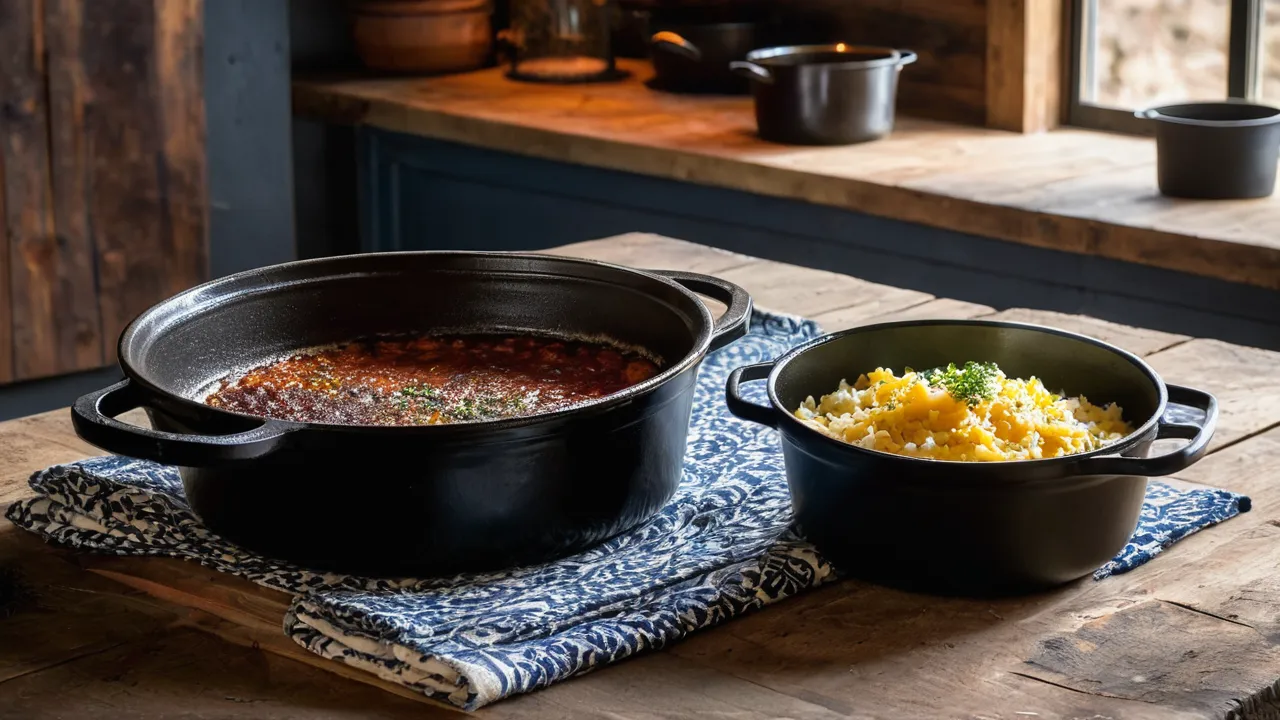
Bare cast iron generally lasts longer in the sense that it can be restored almost indefinitely, because a rusted or stripped pan can be scrubbed and reseasoned, while enameled cast iron lasts as long as its enamel stays intact and cannot be repaired once it chips or crazes badly. If you want a pan that can outlive you with care, choose bare cast iron. If you want low upkeep for acidic, wet cooking, choose enameled and accept its coating limits.
Why the Coating Decides Lifespan
Both pots start with the same core: thick cast iron that can last for generations. What differs is the surface. Bare cast iron has a seasoning layer that you build and maintain. Enameled cast iron has a glass coating fused to the iron at the factory.
The lifespan question therefore depends on what each surface does when it fails. Seasoning can be worn off, stripped or rusted, and you can restore it with scrubbing and oil. Enamel, once chipped or cracked, cannot be restored at home. A chip exposes the iron and may spread. This is the key difference, and the reason many old bare cast iron pans survive for a century, while enameled pots typically last as long as their coating does. Our cast iron cookware page covers pan basics, and our Dutch oven page covers pots.
How Bare Iron Ages and Recovers
Bare cast iron improves with use. Each time you cook with fat and heat the pan, you add a little to the seasoning, and the surface becomes smoother and less sticky. Mistakes are recoverable. If you leave the pan wet and it rusts, you can scrub off the rust, wash it, dry it and reseason it. If a previous owner let it go, you can strip it and begin again. Even a pan with a cracked seasoning layer or heavy rust can usually be restored.
The failure modes are mostly physical. A bare cast iron pan can crack if it is dropped or hit with a sudden temperature change, such as cold water on a very hot pan. It can warp if heated unevenly, though cast iron is usually thick enough to resist this. Heavy pitting from long exposure to rust can make the surface rough, but it can often be smoothed by reseasoning.
Maintenance is the price. You need to dry the pan, keep it lightly oiled and avoid soaking and the dishwasher. If you do that, the pan can last for generations.
How Enamel Fails
Enamel is durable but not immune. Chips occur from impact, rim hits, metal utensils banged on the edge or thermal shock. Fine cracks, called crazing, can appear from heat stress. Stains and dulling happen from heat and hard water, and can often be cleaned. Over time, the interior can lose its smooth finish and get rough, which makes food stick.
Once the enamel chips on the cooking surface, the pot has a new risk: exposed iron can rust and flaking enamel can end up in food. Check the maker’s guidance, and see our guidance on chipped enamel before you continue to cook in a damaged pot. Minor rim chips are common and often cosmetic. A pot with good enamel and careful use can last for decades, but its lifespan depends on how well you protect the coating.
Rim, Lid and Knob Wear
The rim and the lid edge are weak points. The lid and pot rims knock together every time you cover and uncover, and chips accumulate. Knobs may crack or loosen, and plastic knobs may have lower temperature limits. A damaged knob can often be replaced, which helps the pot last longer.
Care Effort Compared
| Task | Bare cast iron | Enameled cast iron |
|---|---|---|
| — | — | — |
| Seasoning | Required, ongoing | Not required |
| Washing | Hand wash, dry at once, oil lightly | Hand wash, soak allowed, avoid abrasives |
| Acidic foods | Limit while seasoning is young | Fine |
| Utensils | Metal is usually fine with care | Wood, silicone or nylon preferred |
| Dishwasher | No | Maker-dependent, hand wash preferred |
| Rust risk | Yes, if left wet | Only if enamel is damaged |
Enameled pots are easier day to day, but they ask you to protect the coating. Bare iron asks for a routine but forgives mistakes.
Warranty and Repair Reality
Many enameled makers offer a warranty against enamel defects, with limits on impact damage and misuse. If your pot chips from a drop, a claim is unlikely to succeed. If the enamel flakes in normal use, a claim may be worth making. Keep proof of purchase and photos, and follow the claim steps in the terms.
Bare cast iron rarely needs a warranty, because the metal is simple and robust. Some makers offer a lifetime promise on bare pans, usually for defects such as casting flaws. Repair is also easy: reseasoning and rust removal cost little and can be done at home. For enameled pots, repair is limited to cosmetic touch-ups, and you should not rely on any touch-up for a cooking surface unless the maker says it is food safe.
Choosing Between Them by Lifetime Cost
Think about cost per year of use. A bare skillet that costs little and lasts for generations has a tiny yearly cost, provided you keep it dry and oiled. An enameled pot that costs several times as much can still be good value if it serves for twenty years of weekly stews. But if it chips in three years from a dropped lid, the yearly cost climbs. The expected life of an enameled pot depends on how you treat it, so be honest about your habits. Cooks who handle cookware gently and store lids carefully get the most from enamel. Cooks who stack, bang and drop do better with bare iron.
Also think about the jobs. A bare cast iron skillet suits searing, frying and baking cornbread, where a rough, seasoned surface is an asset. An enameled Dutch oven suits braises, soups and bread, where a non-reactive surface and easy cleaning matter. Matching the pan to the job is as important as picking a material. If you want only one pot for wet cooking, enameled is the practical pick. If you want only one pan for dry-heat cooking, bare iron is.
Buying Used
Older bare cast iron skillets are widely available second hand and can be restored, often with a smoother surface than new pans. Check for cracks, deep pits and warping before you buy. Used enameled pots are riskier, since you cannot see wear inside a lid or under stains, and you may not know the pot’s history. Inspect the interior for chips and the base for cracks, and avoid pots with unknown enamel, particularly very old ones, if you are unsure about their materials. A new enameled pot with a warranty is often the safer choice.
Who Should Choose Which
- Choose bare cast iron if you want the longest possible lifespan, do not mind seasoning and like searing, frying and baking.
- Choose enameled cast iron if you cook acidic, wet foods like tomato sauces, soups and braises, and want low maintenance.
- Skip enamel if you are rough with cookware, use metal tools freely or want a pan you can restore indefinitely.
- Skip bare iron if you do not want to wash and oil after each use.
- Consider both if you cook widely: a bare skillet for searing and an enameled Dutch oven for braises.
Heat Behavior and Cost Over the Years
Both hold heat well. Bare cast iron can go to very high heat, and enameled pots have limits that depend on the enamel and knob, so check the manual. Bare iron is usually cheaper up front, and enameled pots usually cost more. Over many years, the bare pan can be the lower cost per year if it lasts for generations, and an enameled pot can be a good value if you take care of it and use it often.
A Worked Example
A cook inherits a rusty bare cast iron skillet from a relative. After a scrub, a wash, a thorough drying and a few rounds of oiling and baking, the skillet is back in service and fries eggs without sticking. The same cook owns an enameled Dutch oven that chipped on the rim after a lid hit it, and a few years later has a chip on the interior wall. The skillet can be restored again and again, but the pot’s chip cannot be fixed, and the cook decides to retire the pot from cooking. The experience shows the difference: one pan forgives misuse, and the other depends on its coating.
For how we weigh such comparisons, read how we review.
Frequently Asked Questions
Which lasts longer, enameled or bare cast iron?
Bare cast iron typically lasts longer because rust and worn seasoning can be restored, while chipped enamel cannot be repaired. Enameled pots can last for decades with careful use, but their life depends on the enamel remaining intact.
Can you restore chipped enamel cast iron?
Not safely on cooking surfaces. Touch-up products are usually not made for food contact, and the glass coating cannot be refired at home. Ask the maker about a warranty review, and retire the pot from cooking if the interior is chipped or flaking.
Is bare cast iron harder to maintain than enameled?
Yes, in routine terms. Bare iron needs drying, oiling and occasional reseasoning, while enameled pots need only washing and gentle handling. Over the long run, though, bare iron forgives neglect better, because rust and worn seasoning can be restored.
Is enameled cast iron worth the extra cost?
If you cook acidic or wet dishes often, want low upkeep and will protect the enamel, it can be. If you want the longest lifespan and enjoy seasoning, bare cast iron costs less and can last longer.
Final Thoughts
Bare cast iron lasts longer because it can be restored, and enameled cast iron lasts as long as its enamel does. Choose bare iron for lifespan and searing, enameled for acidic dishes and low upkeep, and protect whichever you pick from impacts and shocks.
Related buying guides
- How to Clean Stains Off Enameled Dutch Ovens
- Oven Safe Temperatures for Cookware and Lid Knobs
- Round vs Oval Dutch Oven: Which Shape Fits You
About the author

The BuyOnceChoice Editorial Team researches durable products worth buying once. Our guides compare published specifications, warranty terms, expert review consensus, and verified owner feedback. We do not conduct our own product trials. See How We Review and our Editorial Policy for our standards.